Modern IP Address Management Solutions for Growing Enterprises
If you're asking "What is IPAM," here you go: IP address management (IPAM) is a technique for planning, tracking, and managing IP address area on a network. IP, which stands for Internet Procedure, is how devices on a network interact with each other. IP addressing is a logical ways of assigning addresses to devices on an IP network.
Managing tens of countless IP addresses for big enterprise networks can quickly get made complex. It's assigning IP addresses to gadgets, yes. It's likewise altering them, erasing them when devices leave the network, dealing with prospective address conflicts, setting up subnets, and designating addresses for usage by particular applications or clouds.
proxies for automation toolsIn this glossary entry, we'll specify IPAM and after that take a much deeper take a look at the advantages of IPAM software tools. We'll look at how it can incorporate with DNS and DHCP. IP (variation 4) addresses are 32-bit integers that can be revealed in hexadecimal notation. The more typical format, referred to as dotted quad or dotted decimal, is x.x.x.x, where each x can be any value between 0 and 255.

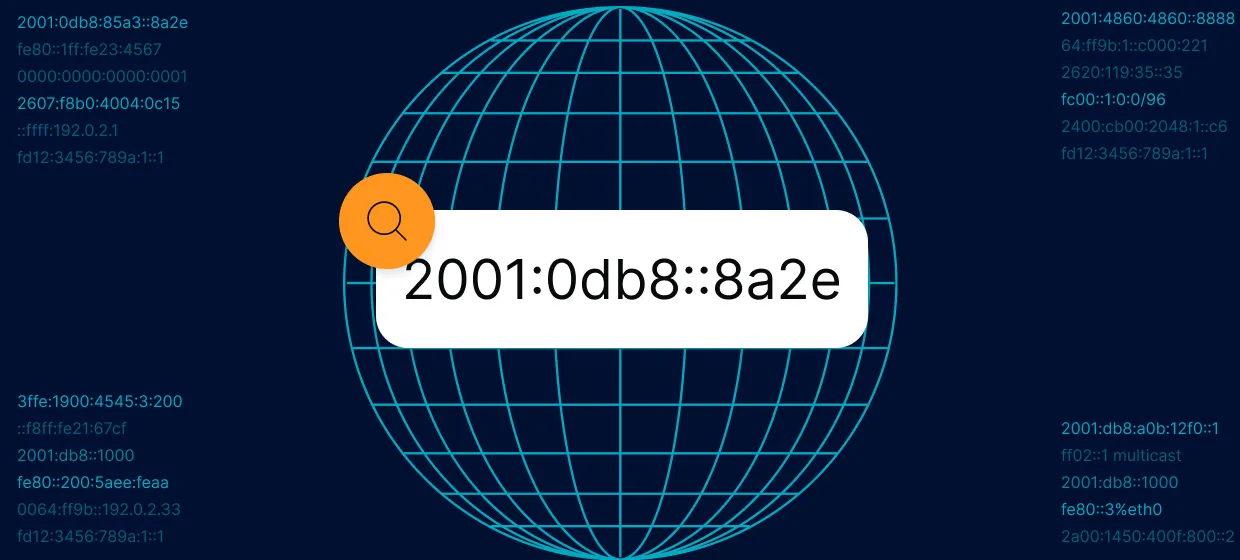
This latest variation of IP is a 128-bit address space, with both letters and numbers expressed in hexadecimal format (for example, 2002: db8::8 a3f:362:7897). If there are hundreds or thousands of gadgets on your network, think of attempting to keep track of each of their IP addresses yourself.
proxies for automation toolsWhy Dedicated VPN Tools Support Modern IT Operations
IPAM can offer network admins a real-time stock of both used and unassigned IP addresses, including information like their subnets, status, hostname, and associated hardware. The challenge with tracking IP addresses gets even more complicated when addressing involves DHCP. This is how most big enterprise networks are run. When a gadget such as a laptop or a smart device joins a network, it generally requests for an IP address from a DHCP server.
This indicates that a device linked to the network does not have a forever address unless the address is reserved particularly for it. The IP address can occasionally change as its lease time ends unless the lease is successfully restored.
Keep in mind Access to this page needs permission. Access to this page requires permission.
IP Address Manager or in some cases interchangeably IP Address Management, is software application that help in the act of managing IP addresses in use, in addition to tracking IP Addresses on a network. Best for groups seeking handled service for IPv4/IPv6 lifecycle management Best for growing enterprises needing extremely scalable DNS and IP tracking Best for big companies desiring visual subnet preparation and automation Best for AD-heavy environments needing centralized DNS/DHCP/IP control Best for big companies seeking a complimentary powerful auto-discovery IPAM Best for cloud-focused groups integrating with AWS, Azure, and ServiceNow Finest for sysadmins handling information center racks and property geography Best for hybrid/multi-cloud organizations requiring enterprise-grade DDI IPAM Software helps admins in dealing with the triage of DDI DHCP, DNS, and IP addresses.
Forgetting to update the list, or simply having several admins describing the list with various strategies or methods, all can produce mayhem and disputes. Even worse yet, it's quite simple for something small like this to cause considerable outages or downtime of crucial systems! As more devices stack onto the network, it is more and more most likely that things will end up being disorganized, particularly when attempting to manage it manually.
Scalable IP Address Management Solutions for Large Enterprises
IP address management also assists with Subnetting and ensuring that you track all subnet IP Addresses that are appointed out a particular subnet. Luckily, there are many choices, both paid and totally free, that provide a large range of options to this really problem that are scalable to practically any environment.
Many IPAM services offer a gambit of functions that will swiftly treat these issues while, at the same time, avoiding future ones! Automatic discovery and analysis of network topography can quickly assess addresses used, search out unneeded sprawl, discover and deal with overlaps, all within simple minutes from a single system.